
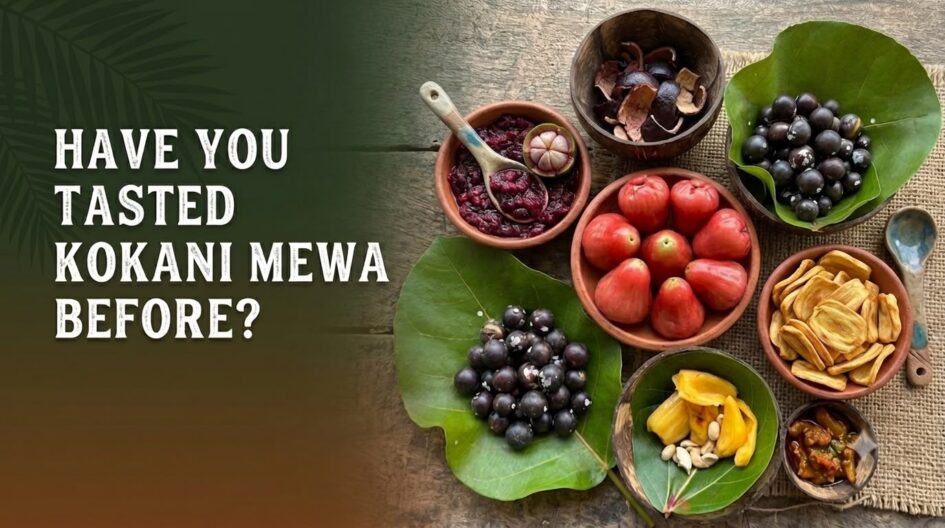
Kokani meva (also spelled kokani mewa) is the Konkan coast’s wild, seasonal fruit — amba, fanas, jambhul, avla, and more — that arrives in a fixed order every summer and tastes like nowhere else in India.
I’m so glad people are finally recognising Konkan beauty. Some travel because of low fares at Chipi Airport, visit North Goa, and have absolutely no idea what Konkan actually looks like. I won’t judge them, as the airport is located on a kaatal land, aka mostly rocky area, so people hardly know the beaches here. However, Konkan reels these days have made our beautiful scenic places accessible to everyone. Read my first time experience here.
This article is dedicated to all the yummy treats Konkan has to offer. Many avoid the coast in summer, but I urge you to visit once for the delicacies. The humidity and sun are scary, but it is definitely worth it. By Konkan, I mean Sindhudurg. Have you ever tried Kokan Mewa before?
By the time April hits the Konkan coast. Every house has the fresh, juicy warmth of ripe amba sitting in a basket by the door, waiting to be counted and guarded from the neighborhood kids. That is Kokani mewa: not the box of almonds and cashews the word means everywhere else in India, but the wild, seasonal, sun-ripened fruit that the red laterite soil produces between summer and the first rains. If you’ve only ever eaten these from a supermarket shelf, you haven’t really eaten them.
Table of Contents
What is Kokani mewa, really?
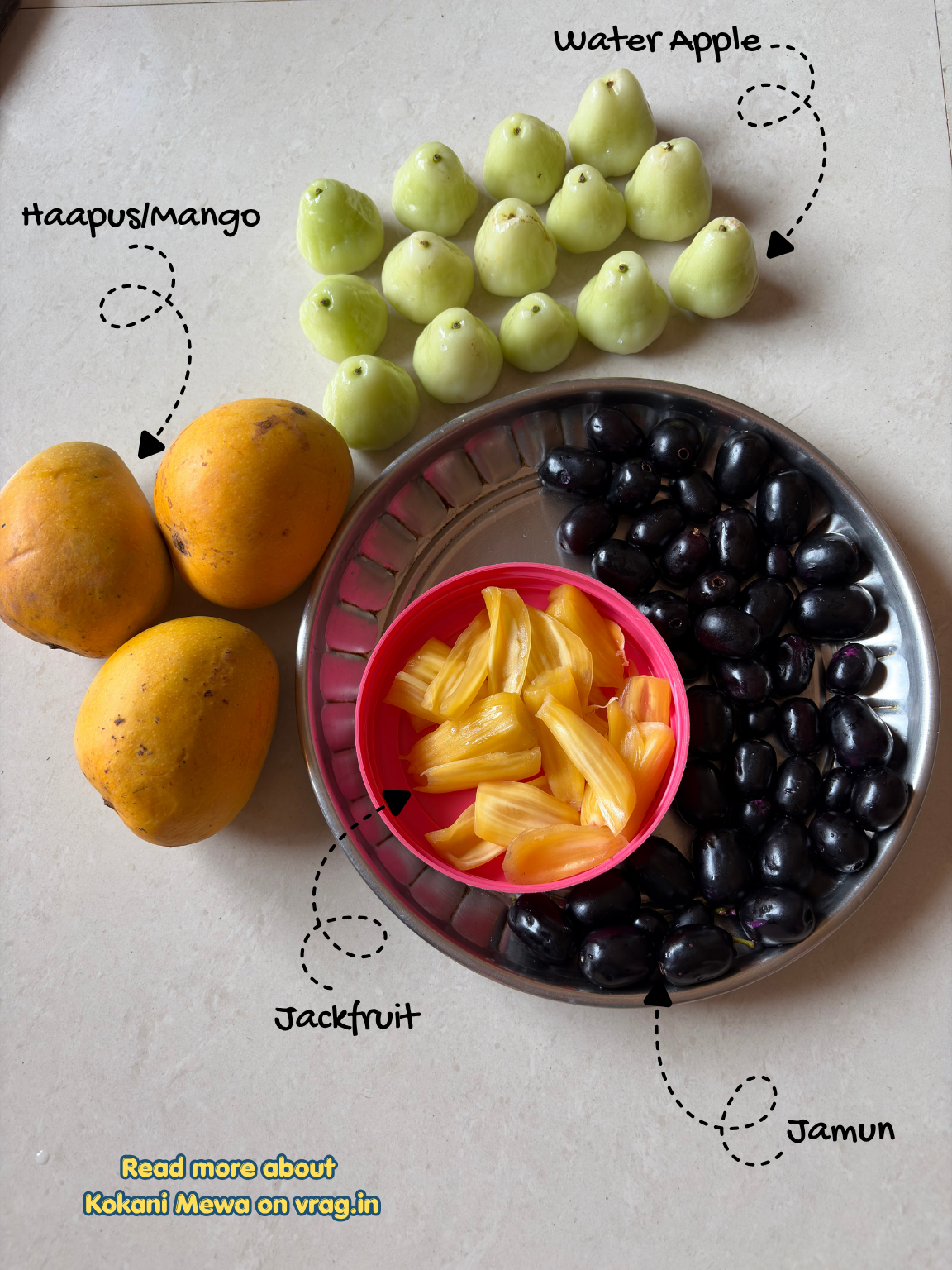
Mewa means dry fruits. But on the Konkan coast, it’s a little different. First, Alphonso Mango, aka amba; then fanas, aka jackfruit; then karvand (Bengal currant or Carandas plum); and finally jambhul or jamun as the sky gets ready for monsoon. Nobody prints this calendar; it’s a natural instinct here. Every Malvani household just knows it, the way you know when the fish stops coming in.
Amba: the king who needs no introduction
I’m sure each one of us has experienced the deliciously juicy Haapus Amba. Yes, Devgad and Ratnagiri Hapus are among the main reasons the world knows about Konkan. Almost every household will have amba poli drying on a cloth on every terrace. Homemade, no-added-color ras with hot ghavane aka neer dosa for breakfast.
Fanas: the fruit that feeds you three times over
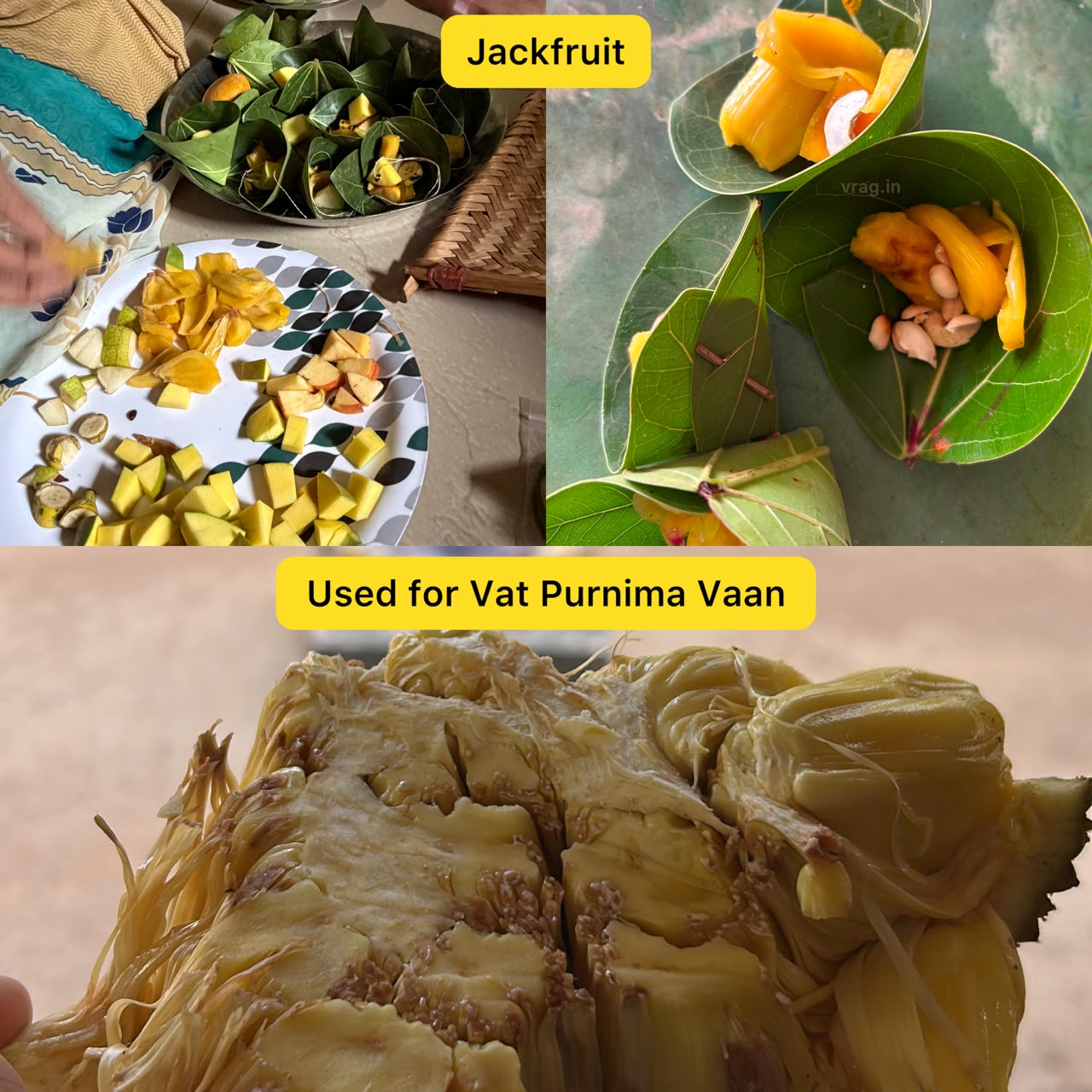
If Amba is the celebrity, Fanas (jackfruit) is the reliable elder who does all the work. And no, we don’t just eat the ripe fruit alone. We turn unripe jackfruit into sabzi (with yellow or red chili, depending on the area or taste preferences); some households even store the jackfruit seeds and use them in other veggies. Locals love Ambapoli and Fanaspoli; they have their own fan bases. We also make jackfruit crispy chips or even koshimbhir. For dry seeds, dry-roast them or use them in dal. One fruit and so many uses.
Jambhul: the fruit that stains your tongue
Jambhul (jamun) is dark purple and mildly tart, and every Kokani person has the same memory. It is the famous scary-and-cute stained tongue and aai scolding for the ruined uniform. It’s way beyond nostalgia; it’s what the aaji generation swears by for blood-sugar balance, long before experts or bloggers discovered it.
Amla: outlasts everything
Avla (amla) is too sharp to eat raw for most; it becomes morawla (murabba), loncha (pickle), and the sun-dried candy that gets you through a long bus ride to Sawantwadi or Devgad. It’s also the fruit that stores, so when everything else is finished, amla is still in the jar.
Jaam: perfect for scorching heat in Kokan
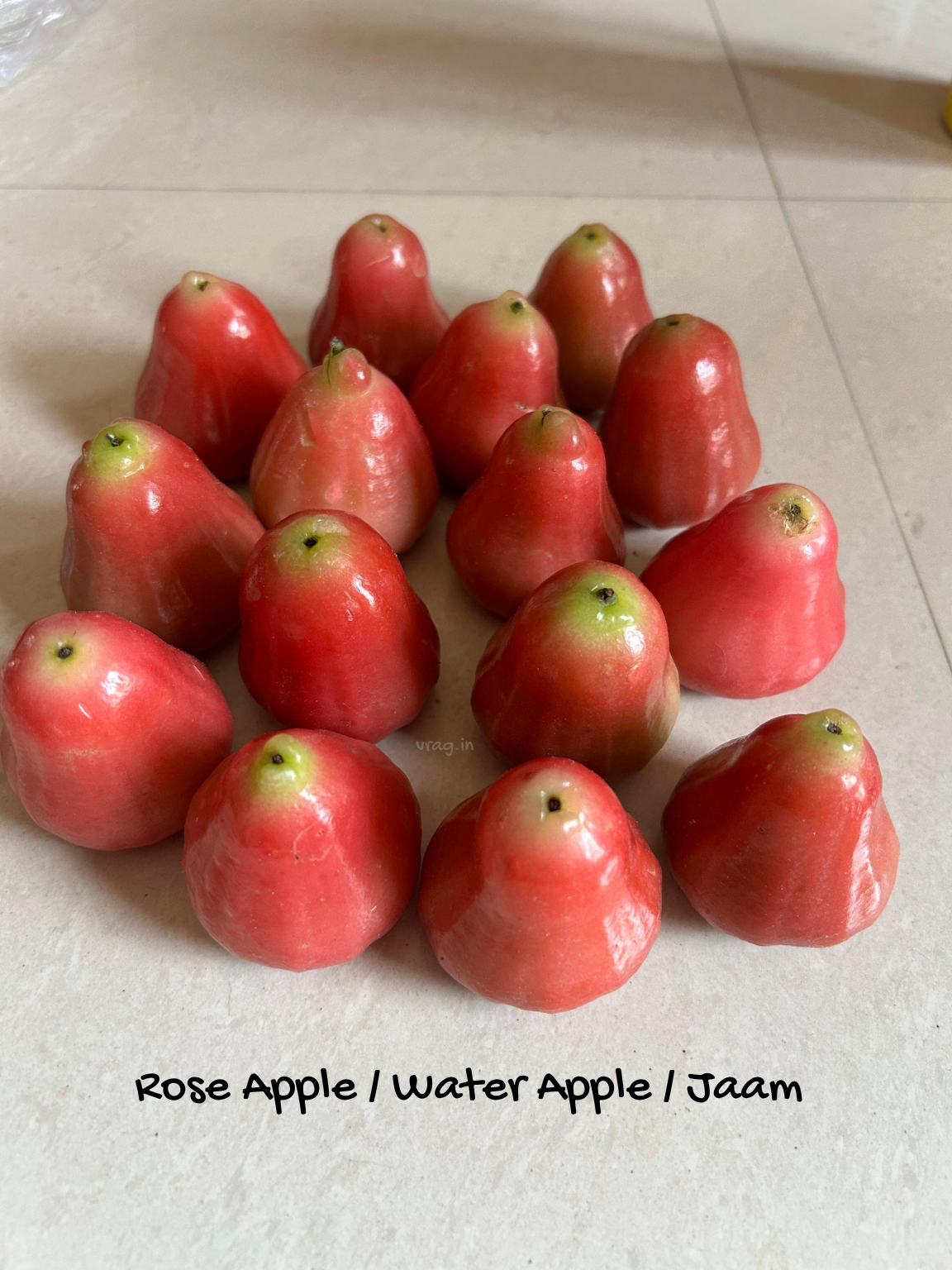
Rose Apple or Water Apple is my favourite. It has a bell shape and has a mild, sweet flavour with a crunch. We have the tree, and my MIL makes sure it stays safe from the monkeys.
And the ones the lists always forget
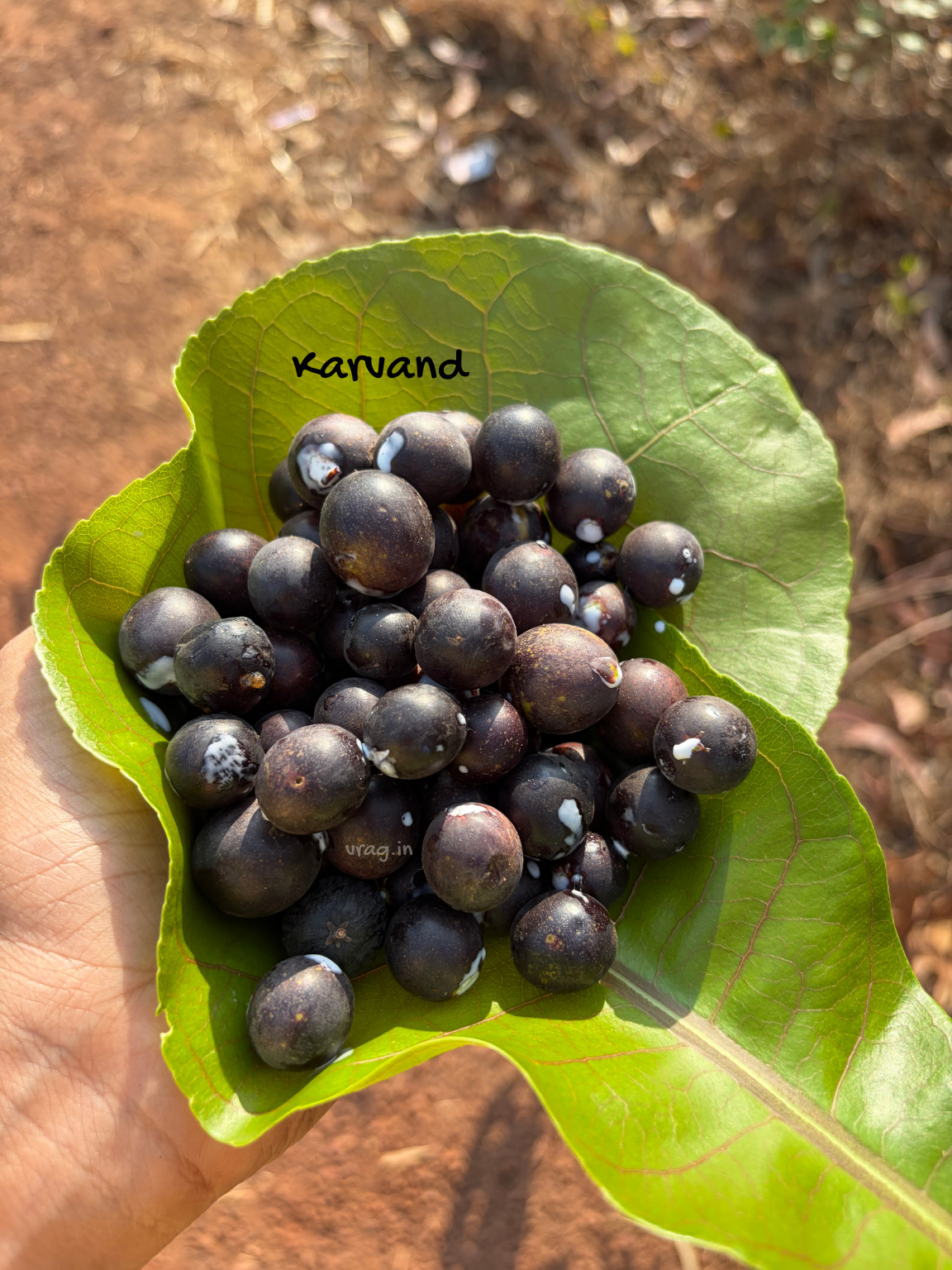
- Karvand – the “black grapes of Konkan,” growing wild in thorny hedges along every mud path absolutely free for only the brave ones to reach in.
- Kokum – not eaten as fruit so much as drunk; no Malvani meal is finished without a glass of pink solkadhi.
- Kaju bondu – the cashew apple, the part the world throws away to keep the nut. Some ferment it or juice it; we don’t waste it.
- Toranjan (तोरंजन), Papanas (पपनस) or Popnus, and Pomelo – the small ones with no export market.
Why does Konkan fruit taste different from the same fruit elsewhere?
The same mango variety, grown two states away, and no, it doesn’t taste the same. The answer is the land: iron-rich laterite soil, sea salt in the wind, and a fruit naturally left to ripen on the tree instead of in cold storage. People often pick fruit when it’s ready.
So always eat it where it grows.
Here’s the truth nobody will tell you: Kokani mewa tastes better. The best kind of jamun is soft in a day. The sweetest fanas gare are the ones still warm, freshly plucked. You can order a box of Haapus to any part of the world and you should, but the real happiness is standing on the Kokan bhumi in that area under the actual tree, or maybe handed a fruit by someone whose family has grown it for four generations.
So plan that trip. Please come to the Kokan between April and the first rains. The Kokani mewa is waiting each season.
This blog post is part of ‘Blogaberry Dazzle’
hosted by Cindy D’Silva and Noor Anand Chawla
in collaboration with Tanvi Agarwal.













Leave a Reply